




















REW held a session on "BRICS+: Technology Partnership Potential"
Speakers discussed topical issues of developing technological cooperation between Russia and other BRICS countries
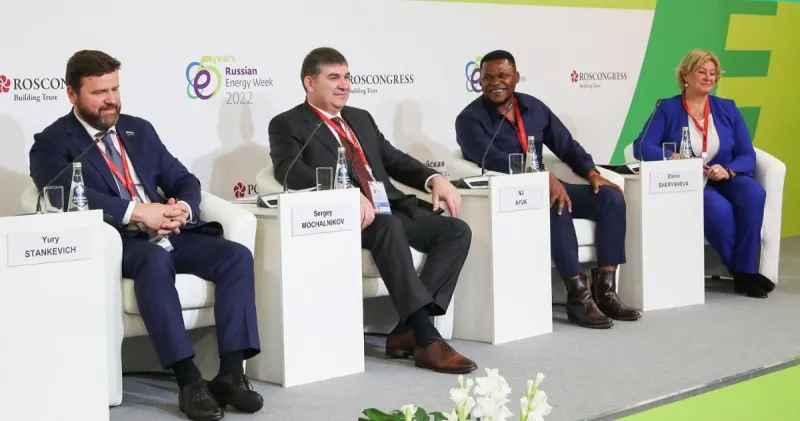
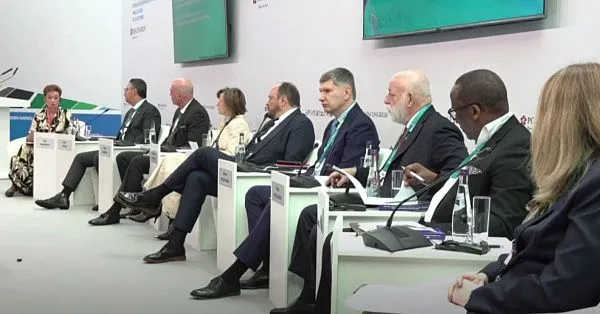
The session 'BRICS+: Potential for Technological Partnership' was held on Wednesday, 12 October, as part of Russian Energy Week. The event was moderated by Oleg Zhdaneyev, Deputy Director General of the Russian Energy Agency (REA) of the Russian Ministry of Energy.
Sergey Mochalnikov, Deputy Minister of Energy of the Russian Federation, was the first speaker at the session: "I believe that BRICS is one of the most promising venues, judging by the size of the economy and the opportunities we can offer each other. Therefore, we ourselves do not yet feel the limits of potential. In my opinion, what we can do together will only be approached in the near future, depending on the tasks we need to solve together. Because one of the main objectives, which we are all well aware of, is to ensure a reliable and affordable energy supply for all inhabitants of the planet."
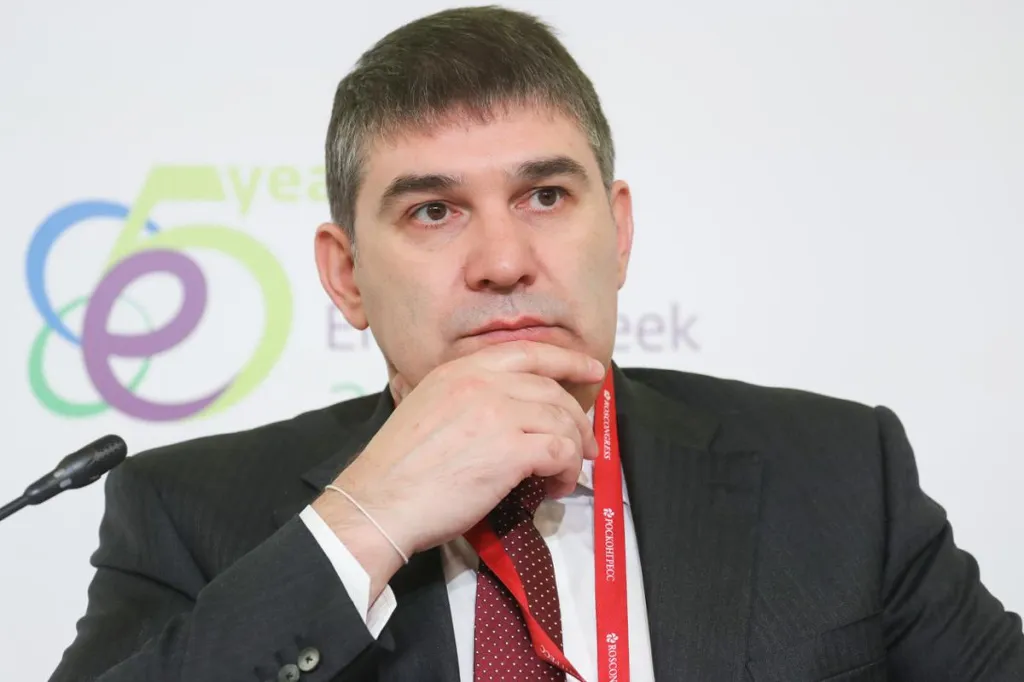
"A symbiosis of basic fossil fuels, but with technologies that you and I need to work together to develop, to implement, to make sure they are environmentally friendly. This symbiosis is what we need to strive for. <...> In terms of expanding cooperation, I consider our BRICS energy platform to be a good example, which is doing research that is very relevant. The Five countries themselves determine their relevance. These studies should be used as a basic textbook on what we start from and what the partners in the Five want to strive for. The BRICS energy ministers meet on a regular basis. Therefore, the platform should be a provider of ideas for plans, including implementation plans to achieve the parameters that our countries consider necessary in the energy sector. So accessing and getting or even owning advanced energy technologies, I think, will be key. Therefore, it is the advanced technology that will have to ensure our reliability and affordability," he added.
Kirill Babaev, Acting Director of the Institute of China and Modern Asia of the Russian Academy of Sciences, identified three main priorities for BRICS technological cooperation as the creation of high-tech zones, digitalisation of the economy and artificial intelligence.
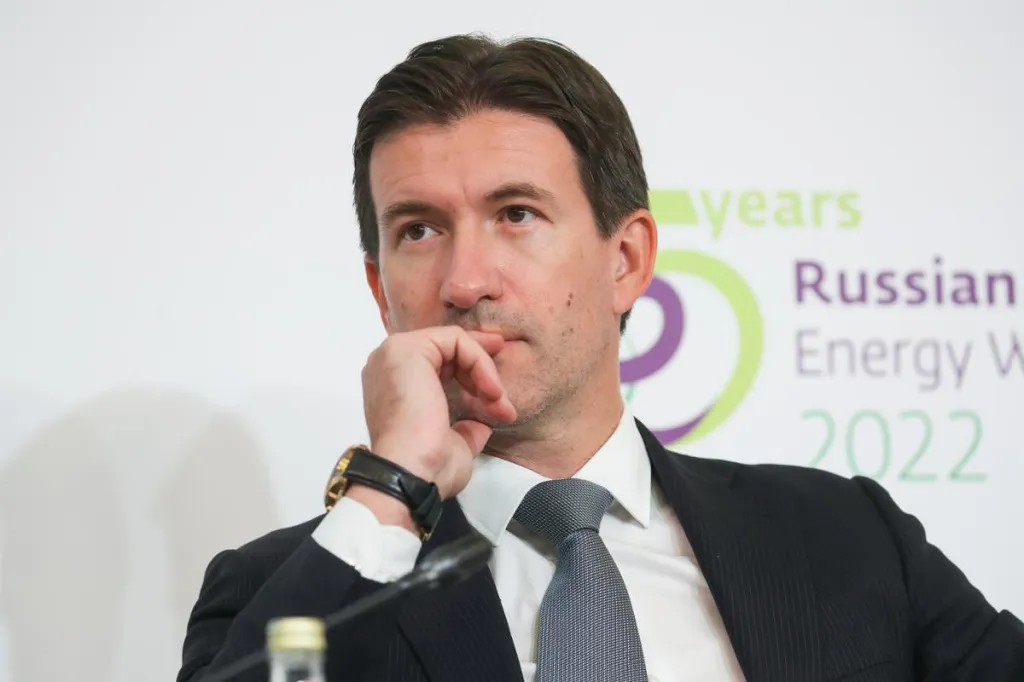
Kirill Babaev also explained how, in his opinion, mutually beneficial cooperation with the PRC should be built: "The key word in this matter is mutually beneficial. China is known to be very clear about its priorities and its interests. We naturally need to respect our own strategic development interests as well, which is why cooperation should be mutually beneficial. Today we can see how actively we complement each other with the People's Republic of China in terms of trade and economic cooperation. On our side come energy resources, on their side come industrial goods, equipment, spare parts. <...> Speaking specifically about technological development, we know that for several decades China actually used the tools of technological development of the Soviet Union, developing its technologies on the foundation of Soviet assistance. We, for our part, now have something to learn from China. In particular, if we talk about IT development zones - about 0.1% of China's territory is IT development zones, it is 15% of the country's GDP. <...> This is something that we can follow today and that we and the other BRICS countries can learn from. Many come with applications to the BRICS precisely in order to receive this kind of technological partnership, this kind of technological assistance.”
Chairman of the African Chamber of Energy, NJ Ayuk, during his speech, noted that in order to develop energy cooperation between Russia and Africa, a platform needs to be created to train young African professionals in the field of energy, which was happening during the Soviet Union era.
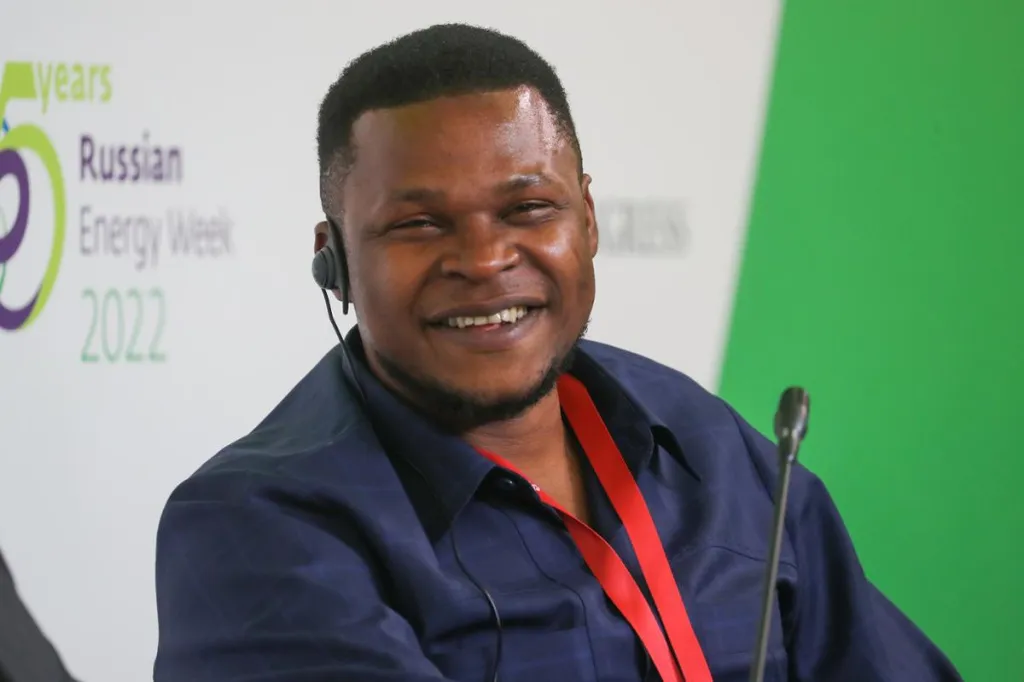
Ksenia Komissarova, editor-in-chief of the TV BRICS international media network, took part in the event.
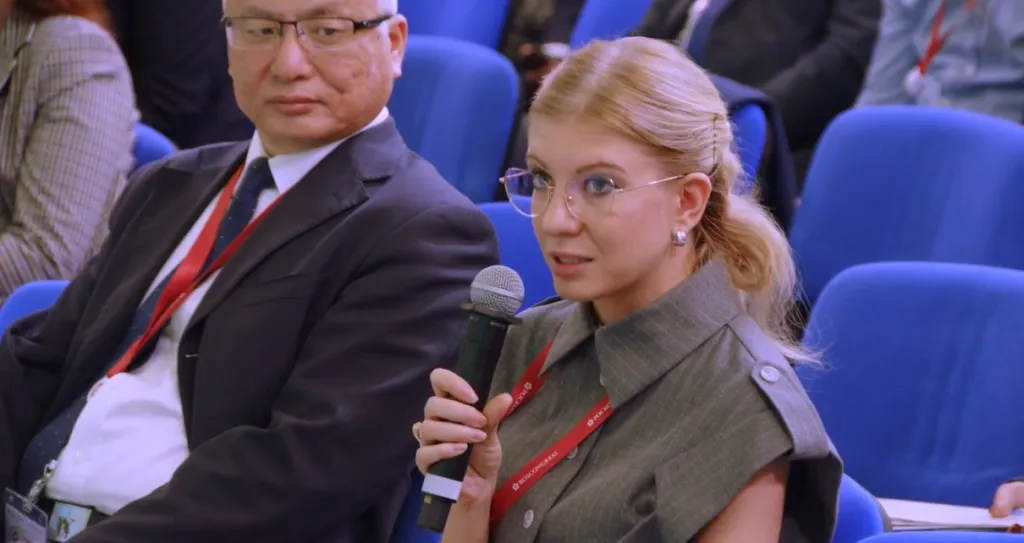
In her speech, she noted that TV BRICS contributes to the development of scientific and technological cooperation within BRICS: "For five years, the TV BRICS international network has been forming a common information space of the Five countries - through the exchange of information, news and video content with our partners. Today, this is already more than forty media outlets in the BRICS countries: TV channels, news agencies, radio stations, digital platforms and social media, where TV BRICS places its own information agenda".<...> "I would like to emphasise that through the promotion of specific cases of domestic enterprises in the field of energy, sustainable development goals through the network of national media of the BRICS countries we can create a positive image, the image of Russia as a modern, knowledge-intensive, technology-driven state in the global information space. This, in turn, provides the basis for business cooperation between the Five countries in the energy and environment sectors."
Recall that the fifth international Russian Energy Week (REW-2022) forum is taking place in Moscow from 12 to 14 October.
Photo: Roscongress
-
![]()
 Society01.11.26BRICS News Digest for the previous week
-
![]()
 Society30.10.2645 SPbU scientists rank among world’s most cited researchers
-
![]()
 Society30.10.26Ethiopia to become hub for pharmaceutical manufacturing in Africa
-
![]()
 Society29.10.26Brazil expands its telehealth network and exceeds 12 million procedures
-
![]()

 Society29.10.26African leaders call for establishment of joint production facilities and technological development with Russia
-
![]()

 Society28.10.26BRICS proposes new tools for industrial cooperation with Africa





















-
![Daniel Francisco Chapo]()
 Daniel Francisco ChapoMozambican President"We have excellent relations with Brazil, Russia, India and China, as well as with our neighbour, South Africa"
-
![Vladimir Putin]() Vladimir PutinRussian President"Construction of the Bushehr Nuclear Power Plant continues. We are also cooperating in the humanitarian sphere; the number of Iranian students studying at our universities, for example, has reached about 10,000. In late September and early October, a series of vibrant events was held in various Russian cities as part of the Iranian Culture Festival – namely, in Moscow, Kazan and Astrakhan"
-
![Abdel Fattah El-Sisi]() Abdel Fattah El-SisiEgyptian President"Today, we are striving to strengthen Russia-Egypt strategic partnership and hope to expand cooperation between our countries across various sectors – primarily in the economy and trade, as well as in areas related to grain supplies, which are of great importance to our nation"
-
![Andrey Denisov]() Andrey DenisovChairman of the Federation Council Committee on Foreign Affairs"Today, BRICS is not simply a dialogue platform for member countries but a genuine mechanism for coordinating positions on sustainable development and reforming global financial and economic institutions"