
















BRICS Project Lab discusses technological development of cities in the Five countries
The forum aims to create new promising projects for the Five countries
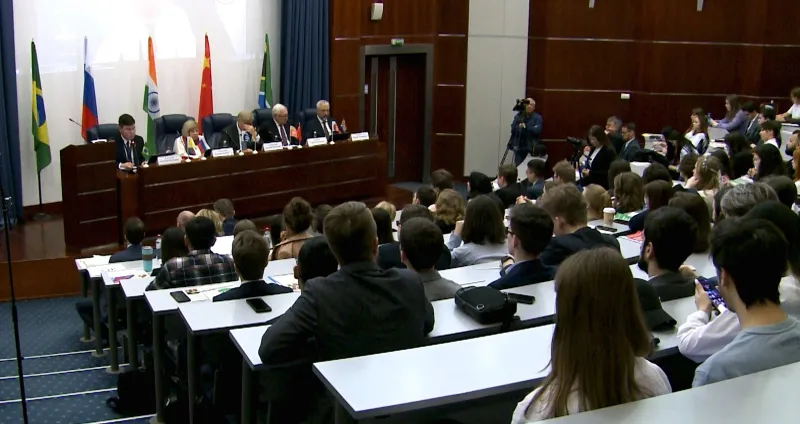
The 2nd BRICS International Youth Project Lab took place in Moscow. The aim of the forum is to create new promising projects for the Five countries. The meeting took place at MGIMO. In the official part, the participants were greeted by the University rector Anatoly Torkunov.
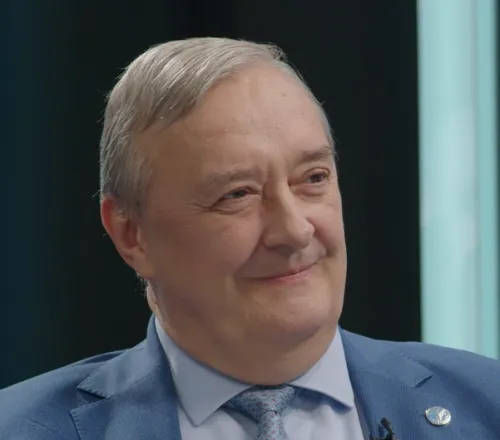
"More young researchers are taking part in the lab this year. They have a rich research, cultural programme. More complex topics are stated. These are preservation of historical and cultural identity, restoration of global ecosystems, technological development of BRICS cities, BRICS in the new system of international relations, policies of BRICS countries to promote international development and humanitarian diplomacy," said the Rector of MGIMO MFA of Russia.
The Five countries cooperate effectively in agriculture, information technology, payment systems, healthcare and the humanitarian field. The prospects for such cooperation are continually growing, and other countries are becoming more and more interested in the alliance.
"BRICS is based on respect for the national interests of the participating countries, a constant search for consensus and a sound balance of interests in solving international problems. The development of cooperation in the BRICS format is an unconditional priority of Russia's foreign policy. We are confident that the future lies in structures that are able to respond flexibly to emerging challenges and demonstrate cohesion and co-operation," stressed Sergei Ryabkov, Deputy Foreign Minister of the Russian Federation.
The forum participants also summed up the Indian phase of the international socio-cultural programme 'BRICS Peoples Choose Life'. It took place in New Delhi, Mumbai and Pune.
"This programme has brought the peoples and cities of Russia and India closer together. The same is happening in the Chinese, Brazilian and South African destinations. What the agency manages to do is primarily fieldwork: selecting students to study at Russian universities. This is our academic and educational diplomacy, and the number of places allocated to BRICS countries (for students to come here) is certainly growing and will continue to grow," said Yevgeny Primakov, head of the Federal Agency for the Commonwealth of Independent States, Compatriots Living Abroad and International Humanitarian Cooperation (Rossotrudnichestvo).
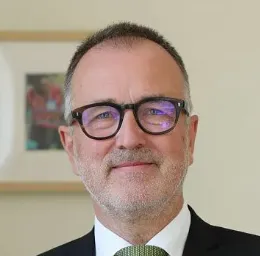
The programme has provided new tools for cooperation and joint development among the Five countries and has opened the door to new international youth projects. Brazil, which will hold the BRICS chairmanship in 2025, has expressed its desire to host the second phase of the humanitarian programme. On the margins of the laboratory, the staff of the diplomatic mission delivered an address by Rodrigo de Lima Baena Soares, Ambassador of the Republic to the Russian Federation.
"We note with satisfaction your idea to implement in Brazil the second phase of the programme "BRICS Peoples Choose Life" and we very much appreciate the objectives of this project, aimed at the emotional, moral, spiritual, physical strengthening of the BRICS peoples, at preserving their cultural, historical heritage," said Lucas Andrade Aguiar, Second Secretary of the Brazilian Embassy in the Russian Federation.
The international socio-cultural programme 'BRICS Peoples Choose Life' was organised by the regional NGO 'BRICS. The World of Traditions", led by Lyudmila Sekacheva. The authors produced a documentary about the Indian phase, in which the participants were able to note in detail the results of the work done.
"Dmitry Likhachev used to say that morality is 'the most powerful unifying element'. And so the main goals of our programme, which serves to unite the peoples, have been to support people's spiritual and moral health and to promote human health. And our humanitarian and business tracks of the programme in India have served this purpose," mentioned the president of the regional "BRICS. The World of Traditions" NGO.
As a result of the programme, the first Russian-Indian cultural and educational centre named after Leo Tolstoy and Mahatma Gandhi was established in Delhi on the basis of the Dwarka public school. The best of the new projects will be sent to the relevant agencies for further implementation.
Photo: TV BRICS
-
![]()
 Society01.11.26BRICS News Digest for the previous week
-
![]()
 Society30.10.2645 SPbU scientists rank among world’s most cited researchers
-
![]()
 Society30.10.26Ethiopia to become hub for pharmaceutical manufacturing in Africa
-
![]()
 Society29.10.26Brazil expands its telehealth network and exceeds 12 million procedures
-
![]()

 Society29.10.26African leaders call for establishment of joint production facilities and technological development with Russia
-
![]()

 Society28.10.26BRICS proposes new tools for industrial cooperation with Africa

















-
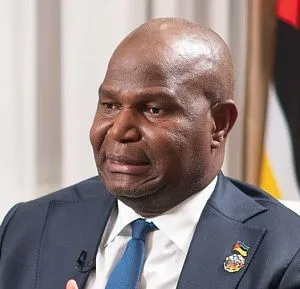
![Daniel Francisco Chapo]()
 Daniel Francisco ChapoMozambican President"We have excellent relations with Brazil, Russia, India and China, as well as with our neighbour, South Africa"
-
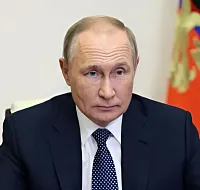
![Vladimir Putin]() Vladimir PutinRussian President"Construction of the Bushehr Nuclear Power Plant continues. We are also cooperating in the humanitarian sphere; the number of Iranian students studying at our universities, for example, has reached about 10,000. In late September and early October, a series of vibrant events was held in various Russian cities as part of the Iranian Culture Festival – namely, in Moscow, Kazan and Astrakhan"
-
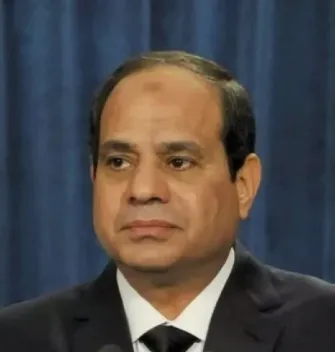
![Abdel Fattah El-Sisi]() Abdel Fattah El-SisiEgyptian President"Today, we are striving to strengthen Russia-Egypt strategic partnership and hope to expand cooperation between our countries across various sectors – primarily in the economy and trade, as well as in areas related to grain supplies, which are of great importance to our nation"
-
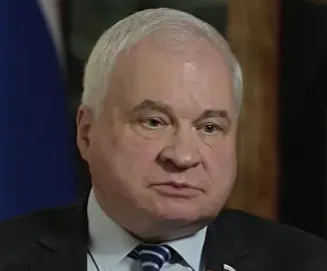
![Andrey Denisov]() Andrey DenisovChairman of the Federation Council Committee on Foreign Affairs"Today, BRICS is not simply a dialogue platform for member countries but a genuine mechanism for coordinating positions on sustainable development and reforming global financial and economic institutions"